
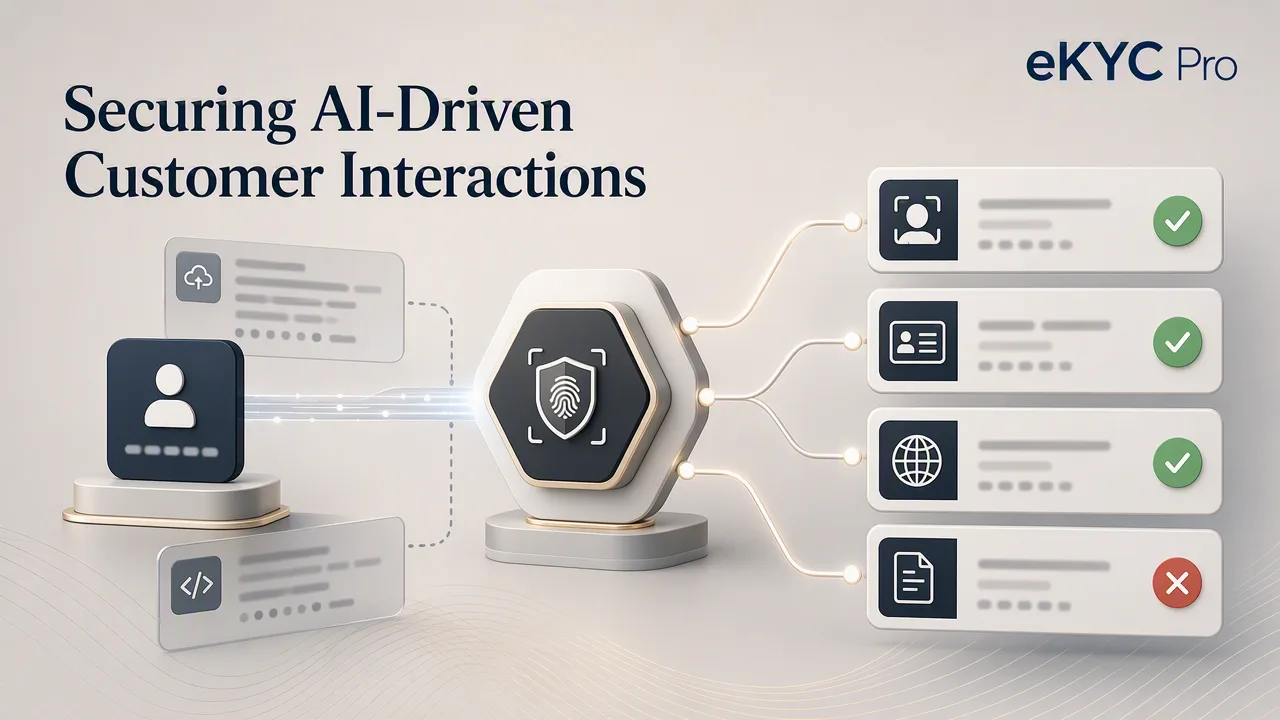
Securing AI-driven interactions requires a multi-layered approach that prioritizes user experience while managing risk. By integrating registration signals—which confirm if a phone number or email is associated with an existing platform account—businesses can triage users at the point of entry. This workflow helps identify potential synthetic identities and supports more informed, customer-defined risk decisions without adding excessive friction to the onboarding process.
The Challenge of Identity in AI-Driven Platforms
AI-driven platforms face unique risks from synthetic identities and automated interactions. Managing these risks requires a verification strategy that balances security with user friction. Traditional document-based checks can introduce significant hurdles during initial onboarding, prompting the need for lightweight, non-intrusive signals that inform internal decisions early in the user journey.
Leveraging Registration Signals for Triage
A registration signal provides a digital footprint indicating whether a specific identifier is associated with an account on a particular platform. Rather than acting as absolute proof of identity, these signals serve as decision-support inputs for internal rules engines. By checking if a phone number or email has an established presence on known platforms, risk teams can use this context to support customer-defined decisioning. For example, checking a registration signal at the registration gate can help teams review potentially anomalous accounts before they interact with AI services.
Implementing a Synchronous Verification Workflow
Integrating identity signals effectively relies on a synchronous request-response flow. In this model, a system submits a single identifier and receives a signal response within the same communication cycle. eKYC Pro supports single-identifier workflows for phone and email checks. Using the Per-call API, teams submit one supported identifier to one selected service and receive that service’s registration signal synchronously. Alternatively, the Combo Check API allows businesses to apply a customer-selected group of supported services to one identifier, returning combined, service-specific signals. These distinct workflows ensure that the verification step integrates smoothly into existing onboarding sequences.
Best Practices for Risk Decisioning
To maximize the value of registration signals, organizations should treat them as a triage layer rather than a standalone solution.
- Inform, do not replace: Use registration signals to inform human-in-the-loop or rule-based oversight.
- Apply across the lifecycle: Utilize single-identifier checks at various touchpoints, from the initial registration gate to verifying recovery contact information during password resets.
- Maintain separate inventories: Keep Per-call service signals, Combo combined signals, and Phone Trust Score outputs strictly separated in your risk architecture to ensure accurate customer-defined routing and branching.
FAQ
How do registration signals help identify synthetic users?
Registration signals provide a digital footprint by confirming if a phone number or email is associated with an existing platform account. This context helps teams review identifiers and supports internal rules engines in identifying potentially synthetic users.
What is the role of synchronous verification in a fraud stack?
Synchronous verification utilizes a request-response flow where a system submits an identifier and receives a signal within the same communication cycle. This supports triage at the point of entry without disrupting the user journey.
Get Started with eKYC Pro
Explore eKYC Pro’s single-identifier APIs and choose the service-specific, combined-signal, or unified-score workflow that fits your use case.