
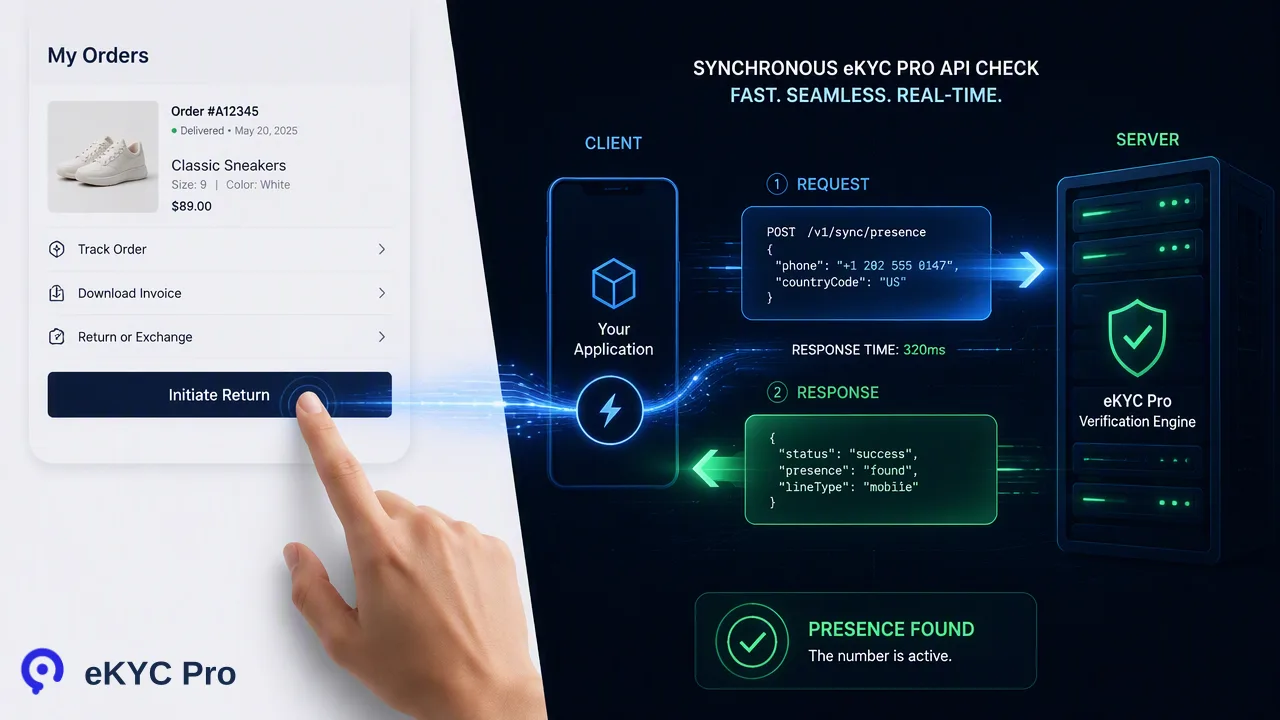
When addressing return abuse and margin leakage, static policy enforcement often falls short against synthetic or disposable identities. Integrating account-presence signals into your risk stack provides a triage layer that supports your internal review processes. By checking whether a phone number or email is registered with specific platforms, teams can gather decision-support data during high-risk events like returns and refunds. This single-identifier workflow helps distinguish between established digital footprints and potentially high-risk accounts, informing customer-defined rules without relying solely on manual review. Ultimately, these signals contribute to a more systematic approach to evaluating transaction risk.
The Hidden Cost of Return Abuse
Return abuse contributes significantly to margin leakage, often leveraging synthetic identities or burner contact information to exploit refund policies. Bad actors frequently construct synthetic profiles by combining disparate pieces of information, making them difficult to detect through basic formatting checks. Traditional approaches rely heavily on static rules and manual review, which can be costly and difficult to scale during peak transaction periods. When teams depend exclusively on manual intervention, they face operational bottlenecks that complicate the review of potentially high-risk returns. Shifting from reactive policy enforcement to proactive risk triage helps operations teams address these challenges. By incorporating identity signals into the evaluation process, businesses can better allocate their manual review resources to the cases that warrant additional scrutiny, reducing the administrative burden on fraud teams while maintaining structured oversight of the return lifecycle.
Identity Signals as a Triage Layer
Account-presence signals indicate whether a specific identifier, such as a phone number or email, is registered with a particular platform. In the context of preventing return fraud with identity verification, these signals act as a valuable triage layer. Rather than proving identity ownership or user intent, a platform registration signal serves as decision-support for fraud engines. For example, checking a submitted phone number against known platforms can highlight accounts that lack any digital footprint. This absence of registration data may indicate a disposable account, adding a risk signal that informs internal decisions. By using these signals to flag potentially high-risk identities, teams can route legitimate-appearing customers through standard workflows while applying step-up measures to others. This layered approach helps provide risk engines with actionable context before a return is finalized, supporting more nuanced branching logic than simple binary approvals or rejections.
Implementing Synchronous Verification
Integrating these checks into a risk workflow relies on single-identifier verification. eKYC Pro provides a Per-call API that accepts one submitted phone number or email and checks it against one selected service. This process utilizes a synchronous request-response flow, meaning the system requests and receives the selected service’s registration signal within the same connection cycle. This synchronous flow supports risk assessment during critical user interactions, such as the initiation of a return, without requiring complex asynchronous callback architectures. Because the platform uses a phone-first positioning, each request processes exactly one identifier at a time, providing a focused account-presence signal. Teams can feed this data directly into their existing evaluation logic. By maintaining a strict single-identifier scope, the integration remains straightforward, helping risk platforms query the exact service signal needed for a specific stage of the customer journey.
Optimizing Your Risk Stack
For workflows requiring broader context, teams can utilize aggregated signals to inform their business rules. The Combo Check API applies a customer-selected group of supported services to a single identifier, returning combined, service-specific signals synchronously. These aggregated outputs help create a more comprehensive footprint for risk engines, offering richer decision-support data. Because the interpretation of these signals is entirely customer-defined, organizations can establish their own risk thresholds, routing rules, and branching logic based on the combined account-presence data. For instance, an internal rule might dictate that an identifier with no platform registrations triggers a manual review, while one with multiple registrations proceeds to automated processing. This flexibility helps align the verification step with specific operational requirements, supporting teams as they review return requests systematically and consistently while adapting to evolving abuse patterns.
FAQ
Can I check both phone and email identifiers?
Yes, eKYC Pro supports both phone and email inputs for single-identifier checks. The platform maintains a phone-first positioning, meaning you submit one identifier per request, but supported email identifiers remain available on applicable products like the Per-call API and Combo Check API.
How do these signals integrate with existing fraud engines?
The signals integrate via a synchronous request-response flow, returning an account-presence data point for the submitted identifier. Fraud engines consume this output as a decision-support metric. Teams can configure their engines to use the data for routing, step-up authentication, or manual review escalation based on their own internal thresholds.
What is the difference between the Per-call API and the Combo Check API?
The Per-call API submits one supported identifier to one selected service and receives that single service’s registration signal. The Combo Check API applies a customer-selected group of supported services to one identifier, returning combined, service-specific signals. Both operate as single-identifier workflows using a synchronous request-response flow to provide decision-support data.
Get Started with eKYC Pro
Explore eKYC Pro’s single-identifier APIs and choose the service-specific, combined-signal, or unified-score workflow that fits your use case.